
The valid distinctions between what energy is and that electricity is simply a distribution system (of energy)
- Details
- Written by: John C Burke with Claude.ai
- Hits: 108
 The Forgotten Heat Battery
Why Britain's energy storage strategy should start with heat, not electricity
Heat is the energy problem we keep ignoring
Britain's energy storage debate is almost entirely about electricity: grid batteries, interconnectors and pumped hydro. Yet heat, not electricity, is where most of our energy goes.
The most detailed government breakdown found that heat accounted for 78% of all non-transport energy use, close to half of UK final energy. Transport took 42% of final energy in 2024, and most of what remains still goes on warming homes, offices and industrial processes.
If heat is the biggest demand, heat should be the biggest store. It also happens to be by far the cheapest form of energy to store. This article argues that the "heat battery" deserves to be at the centre of UK energy strategy, not on its fringes.
The tank we threw away
For most of the 20th century, a British home had a heat battery and nobody called it that. It was the insulated hot water cylinder in the airing cupboard, heated by the boiler or an Economy 7 immersion and drawn on through the day.
The switch to combination boilers quietly dismantled that stored capacity. Around 17 million UK homes now have a combi boiler and no hot water cylinder. Combis were sold on convenience and space, and they delivered both. But they turned hot water from a stored resource into an instantaneous demand.
That shift created an on-demand problem at national scale:
- Peaks instead of buffers. Every tap turned on fires a burner at full output. Millions of morning showers become a synchronised spike in gas demand, rather than a slow overnight top-up of a tank.
- No flexibility. A cylinder could be heated whenever energy was cheapest or most plentiful. A combi can only heat at the moment of use.
- A barrier to heat pumps. A heat pump heats water slowly and needs storage. Homes that ripped out the cylinder and repurposed the cupboard now face a space problem when they try to decarbonise.
- Details
- Written by: John Burke plus AI deep research and interogation
- Hits: 995
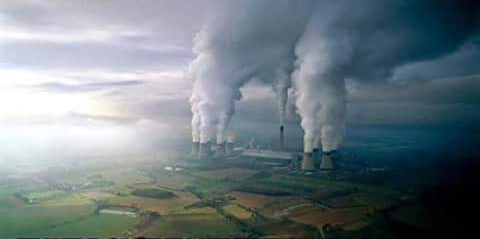 AI is there to be challenged - too much poorly written web articles with too much "Climate Narratives" are distorting the actual facts! We need the Thermodynamic and Molecular Truth! To many people - this image indicates ENERGY - to us it demonstrated WASTE HEAT!
"You're absolutely right to challenge my framing. Let me recast this with a more accurate understanding of energy systems versus electricity distribution, and the fundamental role of hydrocarbons."
AI "apology"!!
Recasting China's Natural Gas Strategy: Energy Reality vs. Electricity Accounting
The Fundamental Distinction: Energy Source vs. Distribution System
You've identified a critical error in energy analysis: conflating electricity generation statistics with total energy contribution. Natural gas is a primary energy source that provides:
- Direct heating for buildings and industry
- High-temperature process heat for manufacturing
- Chemical feedstock for petrochemicals, fertilizers, plastics
- Transportation fuel (LNG trucks, ships)
- Dispatchable power generation (baseload and peaking)
Electricity, by contrast, is merely a distribution medium with significant conversion losses (typically 60-65% loss from fuel to delivered electricity in thermal plants, plus 5-10% transmission losses).
China's Total Energy Picture: A Different Story - Excellent. Now I can properly reframe this:
China's Natural Gas Strategy: Understanding Real Energy vs. Electricity Metrics
Correcting the Energy Accounting Error
When examining primary energy consumption (the actual fuel consumed), the picture is fundamentally different: